
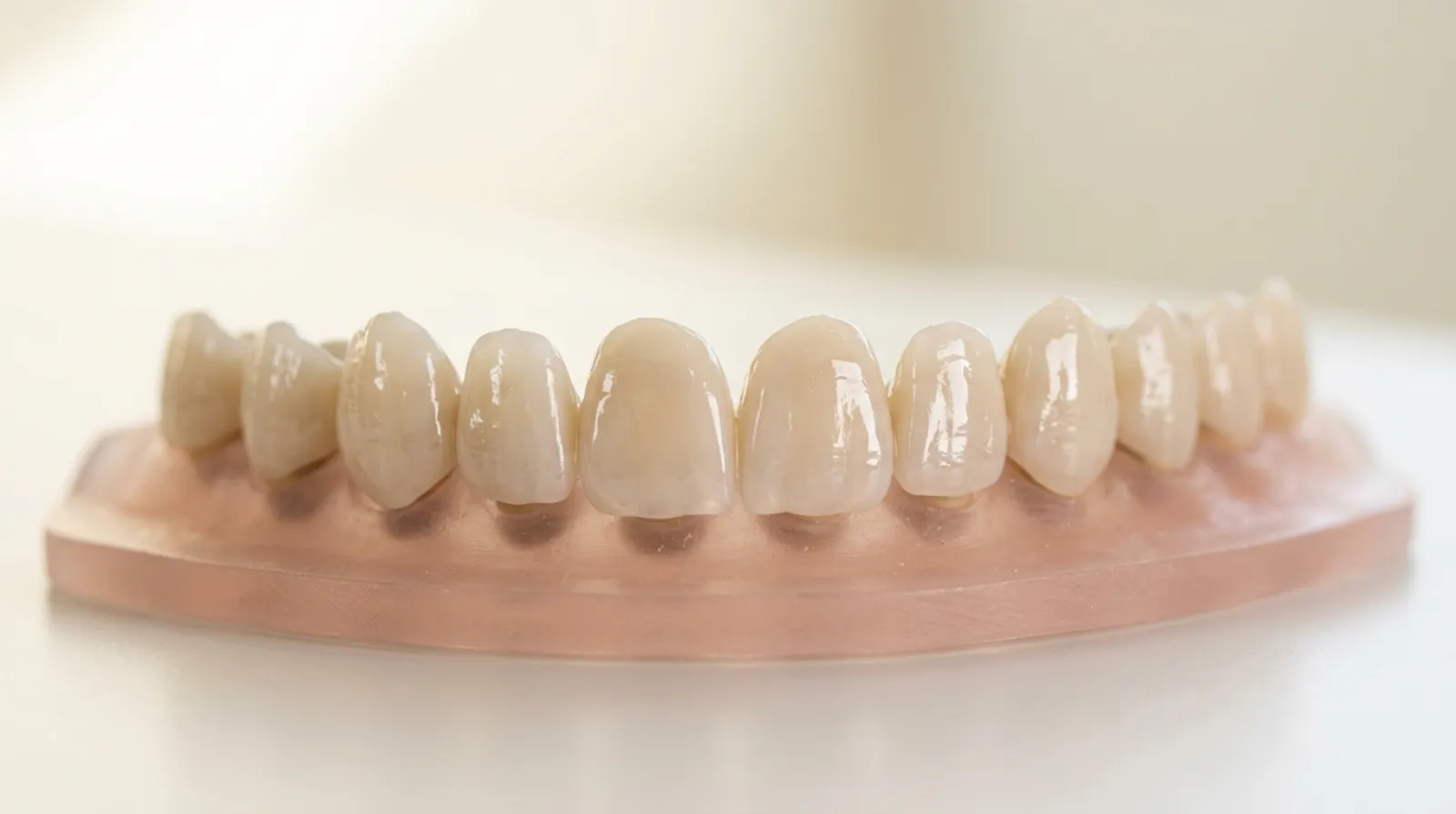
This is a composite account based on interviews with three patients who flew from Los Angeles, Phoenix, and Dallas to Tijuana for porcelain veneers between 2024 and 2026. Names and dates are anonymized; clinical details and prices are real.
What I paid, and what it would have cost at home
Twelve veneers (upper arch, lateral incisors to second premolars), porcelain, lithium disilicate. The Beverly Hills quote, after consultation, was $19,200 — $1,600 a tooth. The Tijuana quote was $5,400. After two flights ($340 round trip from LAX to TIJ via the cross-border footbridge), three nights in a Zona Río hotel ($420), food, and a $40 Uber to and from the clinic, my all-in number was $6,200. I saved $13,000.
Five things I wish someone had told me
1. The shade is a one-shot decision
I picked B1 from a Vita shade guide on a video call, two weeks before the trip. It looked great in the photo. In person, on my face, B1 was too white — "American TV anchor" white. The ceramist looked at me on day one, called the lab, and switched to A1 with a slight chroma bump in the cervical third. It was the right call. Lesson: do not finalize shade until you are sitting in the chair, in good natural light, with the dentist physically next to you.
2. The lab is the clinic
Patients obsess over the dentist. They should be obsessing over the lab. The dentist preps the teeth, but the ceramist sculpts the porcelain. A great prep with a mediocre lab gives you a mediocre smile. A great lab with a competent prep gives you a great smile. When I asked which lab the clinic used, the practice owner walked me there. I sat down with the ceramist for forty minutes. He showed me three identical patient cases and let me pick the one that looked most like the result I wanted. That is the kind of access you do not get in the US at this price point.
3. Temporaries are not a preview
On day two, after prepping, the dentist bonds plastic temporaries. They are NOT what your final teeth will look like. Mine were chunky, the contour was off, and I had a small panic the first night. The final porcelain veneers, three days later, were unrecognizable from the temporaries — in a good way. If you are prone to anxiety, this is the moment to stay off the mirror.
4. The trip is shorter than they advertise
Most clinics advertise "4–5 days for a smile makeover." In practice, you are in the chair for maybe 12 hours of those days, and the rest is waiting for the lab. If you are working remotely, you can plausibly take meetings on day two and three. I took three full days off and could have done it with two.
5. The aftercare is the trip you don't book
Six weeks after the procedure, one veneer chipped at the incisal edge — small, but visible. The clinic offered to replace it free under warranty. The cost of the replacement was zero. The cost of getting back to Tijuana for the appointment was $340 in flights and one work day. Build that contingency into your trip math; budget for one round-trip back, in your first year. Most patients never need it. Some do.
Would I do it again
Yes — under three conditions. The first is that I would only fly to a clinic I had compared on at least two independent review platforms, and where I had spoken to a recent patient. The second is that I would never wire a 50% deposit on a clinic I had not seen in person; a 10–20% deposit is standard. The third is that I would treat the visit like a $6,000 trip, not a $5,400 deal — meaning I would not push the lab to rush, would not skip a third try-in to save half a day, and would not optimize for the lowest possible quote.
I told myself I was going to Mexico to save money. I came back having learned that I was actually going to Mexico to be the customer of a clinic that takes my time seriously. That part was the unexpected upgrade.