
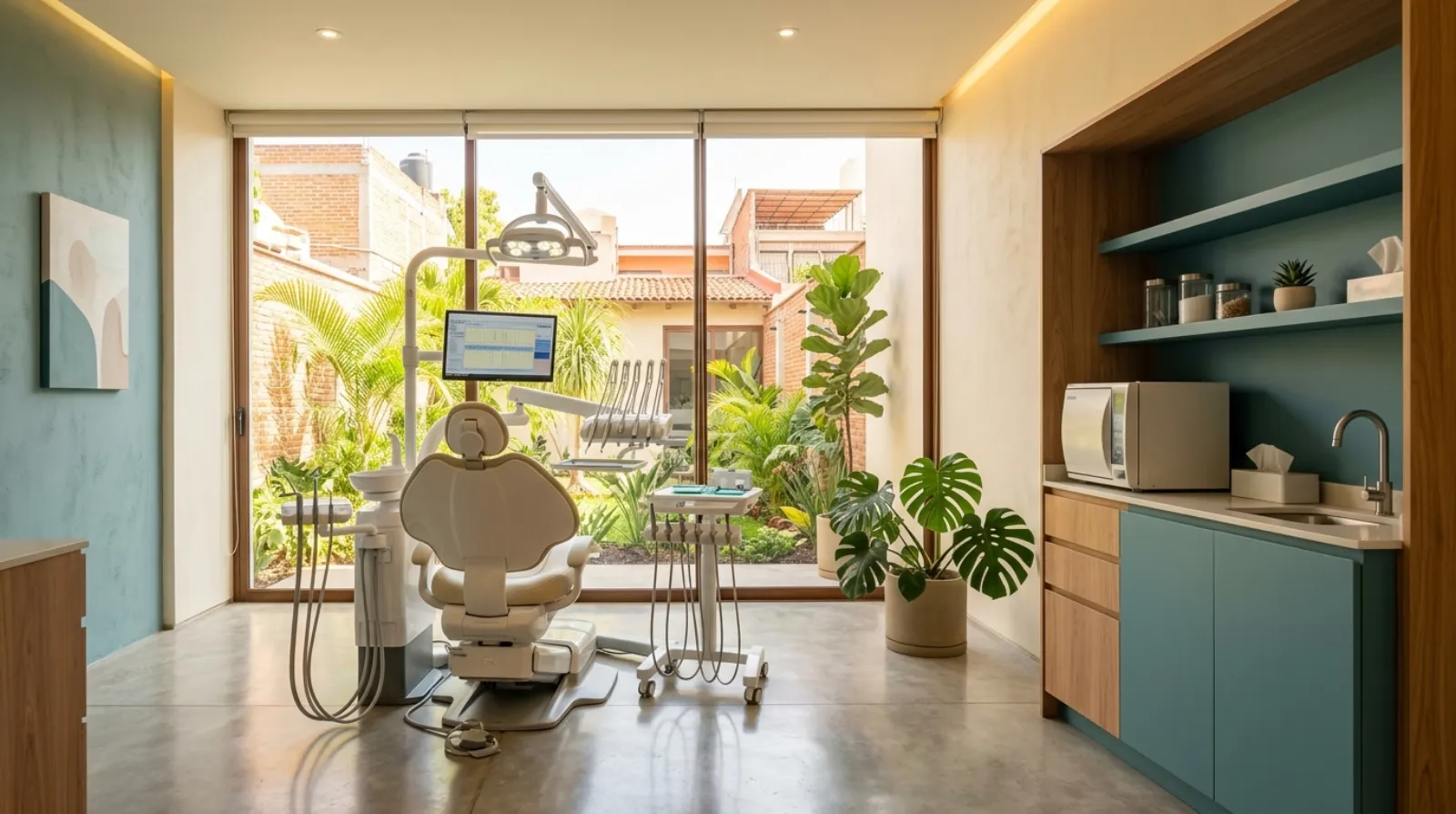
Safety depends on the city, procedure and follow-up plan.
If this checklist makes sense, use these destination and procedure guides to compare realistic costs, travel logistics and documentation before requesting a quote.
Best for Arizona, Nevada and Southern California patients comparing implants, crowns and All-on-4.
Best for San Diego access, complex implant cases and patients who want a large specialist market.
Best for direct flights, resort recovery and dental vacation searches with safety checks.
The procedure where written planning, implant brand and aftercare matter most.
Every week we get the same email: "My dentist quoted me $32,000 for All-on-4. I found a clinic in Mexico for $7,800. Is it safe to get dental work in Mexico?" This 2026 written checklist gives the practical answer most blogs avoid: risk depends much more on the specific clinic, dentist, documentation and aftercare plan than on the country label or the discount.
Mexico has highly qualified dental surgeons and it has lower-quality providers. So does the United States. The difference is that US patients usually have clearer state-board enforcement and malpractice routes, while cross-border follow-up can be harder to navigate. That is a real distinction — but it is not the same as saying every Mexican clinic is unsafe or safe. Below is the written evidence to request before you decide.
So, is dental work in Mexico safe in 2026? Risk can be easier to assess when a specific clinic gives you written evidence before payment and a qualified professional can review the plan, but it is not something to decide from price, country, Instagram photos or a quick WhatsApp quote. Use the checklist below to collect details before you commit.
| Before-deposit check | What to ask the clinic | Stronger written answer |
|---|---|---|
| License | Who exactly treats me, and what is the license number? | Named dentist or surgeon with visible cédula profesional or equivalent registration. |
| Diagnostics | Will you review X-rays or CBCT before confirming the plan? | Written plan based on current imaging, not only photos or a WhatsApp quote. |
| Implant/material brand | Which brand and exact model will be used? | Recognized brand plus implant passport or serial documentation after surgery. |
| Sterilization | What sterilization protocol do you follow? | Specific autoclave and monitoring process, not a vague 'international standards' claim. |
| Warranty | What is covered if something fails after I fly home? | Written warranty terms, exclusions, timeline and who pays for rework or travel. |
| Aftercare | Who handles follow-up when I am back in the US or Canada? | Named coordinator, remote check-ins and a clear escalation path. |
What the official sources say (and don't say)
The US Food and Drug Administration does not regulate foreign clinics, but it does regulate dental devices sold for use in the United States. If a clinic names a recognized implant system — Straumann, Nobel Biocare, BioHorizons, MIS, Neodent or similar — ask for the exact model and manufacturer documentation in writing. The safety question is not just the brand name; it is whether the clinic can document the device, surgical plan and follow-up path for your case.
The American Dental Association and other public sources generally do not function as a green light for a specific foreign clinic. Their practical message is more limited: verify the provider's license, understand how follow-up will work, and do not treat a low quote as proof of suitability. US State Department travel advisories also matter for transit safety; check the current advisory for the city and route you would actually use, not only the country headline.
What the actual numbers look like
The strongest published evidence is procedure- and patient-specific, not country-specific. Implantology studies often report high long-term survival for well-planned cases using documented implant systems, but those numbers cannot be copied onto an individual clinic website or a WhatsApp quote. For a patient, the practical move is to ask what records the dentist reviewed, whether CBCT imaging is required, which implant system is proposed, and how complications will be handled after travel.
The practical risk is selection risk: lower prices can pull patients toward rushed cosmetic work, vague treatment plans, or clinics that communicate well before payment but poorly after treatment. That is why this page focuses on written proof and follow-up logistics rather than predicting whether one country will be safer than another for you.
| Outcome metric | US private practice | Better-documented Mexican clinic | Poorly documented clinic |
|---|---|---|---|
| 5-year implant survival | Often reported in the mid-to-high 90% range | Depends on case selection, planning, materials and follow-up | Hard to assess without records |
| Veneer chip / debond risk | Varies by material, bite and case selection | Depends heavily on diagnostics and lab quality | Higher concern when work is rushed |
| Post-op infection response | Usually handled through local follow-up | Requires a written remote and in-person aftercare plan | High risk if follow-up is unclear |
| Repeat visit to fix the same problem | Usually local | Travel logistics should be agreed before treatment | Costly if warranty terms are vague |
The six written checks before you pay a Mexico dental deposit
If you ask these six questions before you book, you can move beyond generic "is it safe" advice on the internet. None of them require dental knowledge. A documentation-ready clinic should answer them clearly in writing before asking for a deposit.
- Can you send me a photo of the surgeon's cédula profesional (Mexico) or equivalent national license, with the registration number visible? A documentation-ready clinic should be able to explain how you can verify the license in writing before you pay.
- Which brand and exact model of implant will you place — and will you give me the manufacturer's serial-numbered passport after surgery? Ask what traceability document you receive after surgery; do not rely on a brand name in chat alone.
- Do you carry malpractice / liability insurance, and which carrier? "Yes" is not enough — ask for the carrier name, policy details, and a written contact path before you rely on it.
- What is your sterilization protocol — autoclave class, cycle log, and how often is it tested or monitored? A stronger answer names the equipment and monitoring process instead of using vague "international standards" language.
- What is your written warranty on this work — duration, exclusions, what triggers it, and what happens if a covered problem appears after you fly home? Ask who pays for revision visits, materials, and travel-related costs before you deposit.
- Can you connect me to two patients (US/Canadian) who had this exact procedure with you in the last 12 months? Written references can help, but protect privacy and ask about process, communication and follow-up rather than private medical records.
What still goes wrong (and what to do about it)
Even with a credentialed clinic, three classes of problem are over-represented in dental tourism:
- Communication gaps. The surgeon speaks excellent English; the front-desk and follow-up staff sometimes do not. Insist on a single English-speaking case coordinator from quote through follow-up, and confirm in writing.
- Recovery-window mismatches. Complex full-arch work often requires a clear on-site recovery window and written follow-up plan. If a clinic compresses the trip aggressively, ask a qualified dentist whether the timeline fits your case before booking flights.
- Aftercare logistics. A failure that surfaces 8 months later is the hardest thing in dental tourism. Ask whether there is a written remote follow-up path, local referral option, or clear warranty process; do not assume repair or travel costs are covered unless the quote says so.
When to pause and ask a local qualified dentist first
If any of the following apply, do not use an online checklist as your decision-maker. Ask a local qualified dentist or physician to review your medical and dental risk before you send a deposit or book travel:
- You have an active untreated infection, diabetes that is not well controlled, or another medical condition that could affect healing — ask a local qualified dentist or physician before relying on an online quote.
- You smoke or use nicotine and are not sure what changes are needed around surgery and healing — get case-specific guidance from a qualified clinician first.
- Your case requires multiple stages spanning more than 6 months and you cannot commit to two trips.
- You do not have a US-side dentist who has agreed to handle follow-up cleanings and emergencies.
The bottom line
Dental tourism to Mexico is mainly a documentation and follow-up problem, not a country problem. Better-documented clinics can show credentials, implant/material traceability, diagnostic planning, warranty terms and aftercare in writing before you travel. The weakest clinics make those details vague. Your job is not to self-diagnose; it is to collect enough written evidence for a qualified dentist to review before you book or pay a deposit.