A patient writes: "My implant placed in Mexico feels loose, hurts, has swelling, or the crown came off. I am back home. What do I do now?" The answer should not come from a blog or a WhatsApp guess. It depends on what a licensed dentist can see clinically, what imaging shows, what implant system was used, and what the written warranty actually covers.
Use this page as a first-72-hours and aftercare documentation checklist. It can help you organize the questions and records to send to the original clinic and to a local qualified dentist. It is not a diagnosis, emergency advice, or a treatment recommendation.
First: confirm what is actually happening
Patients use the word "failure" for several different situations, and the next step can be very different in each case. A local dentist or specialist who can examine you should separate the possibilities before anyone changes the implant or crown.
- Inflammation or infection around the implant: may need professional evaluation, cleaning, medication, imaging or referral depending on the case.
- Crown or screw loosening: the visible tooth may move even when the implant body is stable. Ask the dentist to identify the brand/system before tightening or replacing parts.
- Abutment or component problem: the connector between implant and crown may be involved; records and implant-system compatibility matter.
- Possible osseointegration or bone-support problem: this requires clinical examination and imaging before anyone decides whether removal, grafting, monitoring or replacement is appropriate.
What records to collect before contacting the clinic
The original clinic can usually respond faster and more clearly when you send documents instead of symptoms alone. Collect what you can, but do not delay urgent care if a dentist tells you there is a time-sensitive problem.
- A short timeline: surgery date, crown delivery date, when symptoms started, and what changed.
- Photos of the area if your dentist asks for them, plus a plain-language symptom description.
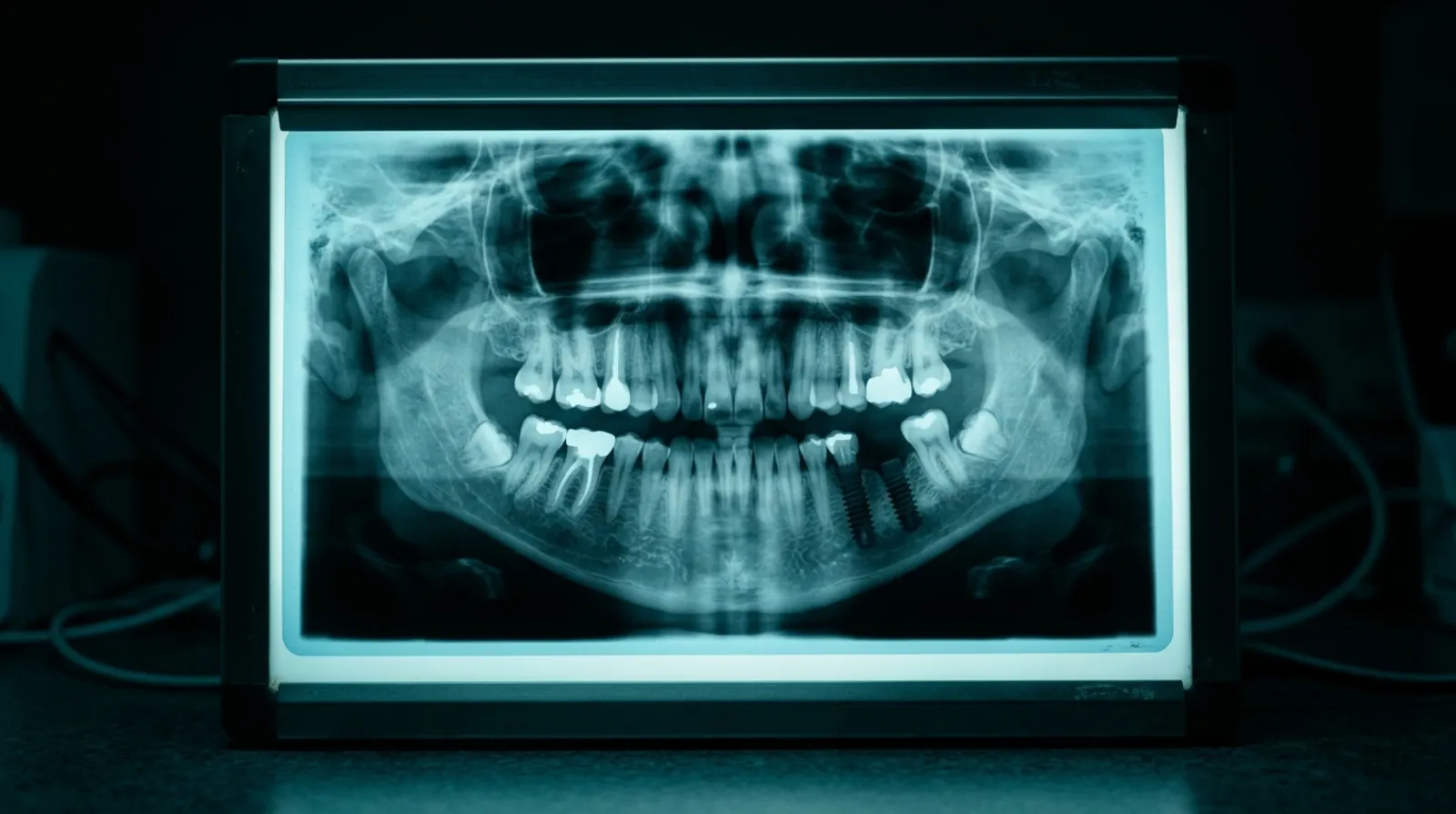
- A current X-ray or CBCT report from a local dentist when available.
- The implant passport, brand, model, diameter/length, lot or serial number if the clinic gave it to you.
- The written warranty terms, original quote, receipt and treatment plan.
- The name of the treating dentist or surgeon and the clinic coordinator who handled the case.
Option 1: written triage with the original clinic
Start by emailing the original clinic with the timeline, local dentist notes, imaging, implant details and warranty document. Ask them to explain in writing what they believe is happening, whether the warranty may apply, what records they still need, and whether they recommend local care or a return visit.
The useful answer is not just "come back" or "you are fine". A stronger clinic should explain who reviewed the records, whether the implant system can be identified, what part of the warranty may apply, and what costs are excluded.
| Question to ask | Why it matters |
|---|---|
| Which dentist reviewed my new X-ray/CBCT and symptoms? | You want named clinical accountability, not only coordinator reassurance. |
| Does my written warranty cover this situation? | Warranty wording may separate implant body, crown, abutment, grafting, surgery fees and travel. |
| If I return, how many visits and days on the ground are expected? | A vague return plan can create extra flights, hotel costs and time off work. |
| If I stay local, what records should my US dentist request? | Implant-system compatibility and documentation reduce avoidable guesswork. |
Option 2: local dentist or specialist review
Local review is often the most practical first step when you have pain, swelling, mobility, bite problems, uncertainty, or a clinic that is slow to reply. Ask the dentist to document what they see and to identify whether the issue appears to involve the crown, abutment, implant body, bone, bite, inflammation or another cause.
Costs vary widely by city, specialty and what has to be done. A simple assessment or X-ray may be modest; revision surgery, grafting, new components or a new crown can become expensive. Before consenting to major work, ask for an itemized written plan and whether the original implant brand/model is known.
Option 3: return to the original clinic
A return visit may make sense when the clinic is responsive, the warranty is clear, the treating dentist can review your records, and the travel cost is reasonable compared with local revision. Do not assume the word "warranty" covers every cost.
| Possible cost item | What to clarify in writing |
|---|---|
| Implant body or replacement component | Is the part covered, and is the exact model available? |
| Surgical fee or removal/replacement visit | Is dentist time included or only the device/part? |
| Bone graft or additional imaging | Is it excluded as a new clinical need? |
| Crown, abutment or temporary tooth | Separate warranties may apply to prosthetic parts. |
| Flight, hotel and time off work | Usually patient responsibility unless the written warranty says otherwise. |
Option 4: second opinion from a different clinic abroad
A different clinic abroad can be an option if the original clinic is closed, unresponsive, refuses to document its position, or you no longer trust the relationship. It also creates continuity problems: the new clinic may not know the implant system, surgical details, grafting history or warranty context.
Before switching, ask the new clinic what records they need, whether they can work with the existing implant system, and whether they are proposing evaluation first rather than promising a replacement plan from photos alone.
What to do in the first 72 hours after you get home
- If you have severe pain, swelling, fever, pus, trouble swallowing, facial swelling or any urgent symptom, seek local medical/dental care immediately.
- Get a local dental evaluation and ask for written findings plus X-ray/CBCT files if imaging is taken. Ask the dentist what needs attention now versus what can wait for records review.
- Send the records to the original clinic and ask for a written warranty/aftercare response that names who reviewed the case.
- Before irreversible work, ask how it affects your warranty and whether waiting for a second opinion is clinically acceptable in your situation.
- Keep every receipt, image file, email thread and treatment note in one folder.
How to choose a clinic with this scenario in mind
The best time to plan for implant aftercare is before the implant is placed. If you are comparing Mexico, Tijuana, Cancun, Los Algodones or another dental tourism destination, ask these questions before paying the deposit:
- Will I receive an implant passport with brand, model, lot/serial details and surgical notes?
- Who handles complications or warranty questions after I fly home?
- Can you review X-rays/CBCT files remotely, and who reviews them?
- What exactly is covered by the implant, abutment, crown and grafting warranties?
- Do you have a written process for coordinating with a local dentist in my home country?
The bottom line
A possible implant problem after dental work abroad is stressful, but the practical path is usually documentation: local evaluation, imaging, implant-system records, warranty terms and written answers from the original clinic. Your job is not to diagnose the implant yourself. Your job is to collect the records and questions a qualified dentist needs before you decide whether to handle it locally, return to the clinic, or seek another opinion.